Brief Summary of the Plot from Goodreads:Wealthy Washington suburbanites Marissa and Matthew Bishop seem to have it all—until Marissa is unfaithful. Beneath their veneer of perfection is a relationship riven by work and a lack of intimacy. She wants to repair things for the sake of their eight-year-old son and because she loves her husband. Enter Avery Chambers.
Avery is a therapist who lost her professional license. Still, it doesn’t stop her from counseling those in crisis, though they have to adhere to her unorthodox methods. And the Bishops are desperate.
When they glide through Avery’s door and Marissa reveals her infidelity, all three are set on a collision course. Because the biggest secrets in the room are still hidden, and it’s no longer simply a marriage that’s in danger.
My Review: The Goodreads synopsis is pretty good so I won’t elaborate on the plot much here, except to say that the book alternates between the perspectives of Marissa and Avery. There are threats lurking behind every corner. Marissa owns a boutique store and starts to get mysterious and at times threatening messages. Is it the guy she slept with? Is Matthew also having an affair with an old girlfriend.
Avery lost her professional license because she went one to step over the line: she broke a patient’s confidentiality when she took information she had learned during a session and leaked it to the news media, essentially becoming a whistle blower. Like Marissa, she is also being threatened, but by the pharmaceutical company who wants to know the name of the informant. Avery adopts a love bug of a Pitbull, but not for protection oddly. I have to say I was a little worried that the dog would get hurt protecting Avery at some point in the book, but happily NOPE! Finally! An author who knows to leave the dog alone 😀.
The authors do a good job of building the tension through out the book and although it started somewhat slow, by the end I couldn’t wait to find out what was in store at the story’s climax. The twist at the end was very unexpected, but I liked it!
This book was great as an audiobook, and it was possible to read while multitasking.
Welcome to Friday 56! Hosted by Freda’s Voice, you turn to page 56 or 56% in any book or reading device and pick a sentence that grabs you.
For a moment, I considered the idea of throwing in the towel; maybe it was time to find a sandwich and plan a real itinerary.
The moment this thought crossed my mind, I shook my head. That sounded exactly like something James would say. As rain continued to batter the glass windows of the library, I willed myself to ignore this voice of reason–the same one that had told me to rip up my Cambridge application and encouraged me to take a job at the family farm. Instead, I asked myself what the old Caroline would do–the Caroline of a decade ago, the zealous student not yet dazzled by a diamond on her finger.”
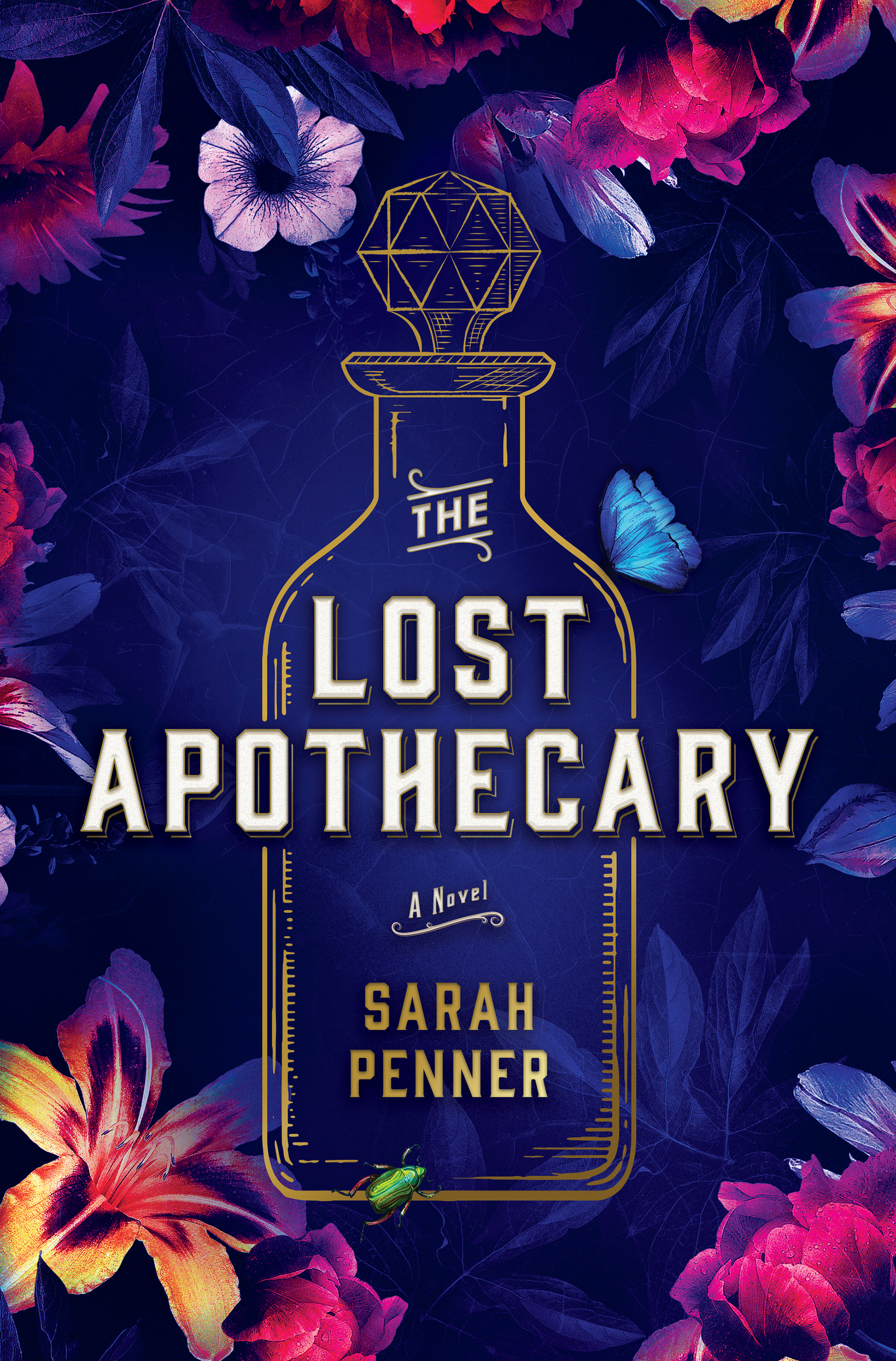
The Lost Apothecary by Sarah Penner
By page 56 of the book we have been introduced to the 2 main characters of the story, Nella and Caroline.
Nella is the owner of a hidden, secret apothecary shop in 1791, which dispenses poisons. Nella only sells to women, often times to dispatch the misbehaving men in their lives. We don’t know too much else about Nella at the moment, other than she used to have a reputable Apothecary (once owned by her late mother), but after a betrayal at the hands of a man (we don’t really know the details of this betrayal yet), she turned to the dark side of potions, elixirs and herbs.
Caroline’s story takes place in “present day” England. An American history major, Caroline has spent the past 10 years preparing to be the dutiful mother. She set aside her dream of going to Cambridge to pursue a higher level education in history, when she accepted the marriage proposal of her then boyfriend (now husband) James. Unable to find a job with merely a bachelors degree in history, Caroline settled into a cozy / stable job at her parent’s farm, where she remained for the last decade. On the other hand, over the past 10 years, James, a brilliant accountant, has risen through the ranks and is close to becoming partner of the firm. It was never the right time to have a baby, but with James’ career finally where it should be, the time has come, and they start trying.
Caroline couldn’t be happier, that is, until she finds out James has been cheating on her. The next day she hops on a plane to England to go on the trip that should have been their 10 year anniversary celebration.
So far, I don’t like Caroline very much. I don’t see why she couldn’t have gone to Cambridge, if they were going to wait to have children anyway. Or why wait to have children, when Caroline was just going to work at the family farm anyway? The whole premise seems silly to be honest. The author has written her to be someone who seems to think that motherhood and a career are somehow mutually exclusive things.
It’s First Chapter First Paragraph Tuesday! Hosted by Socrates Book Reviews this is where you share the first paragraph of one (or in my case sometimes several) of the books that you are currently reading.
She would come at daybreak–the woman whose letter I held in my hands, the woman whose name I did not yet know.
I knew neither her age nor where she lived. I did not know her rank in society nor the dark things of which she dreamed when night fell. She could be a victim or a transgressor. A new wife or a vengeful widow. A nursemaid or a courtesan.
But despite all that I did not know, I understood this: the woman knew exactly who she wanted dead.”
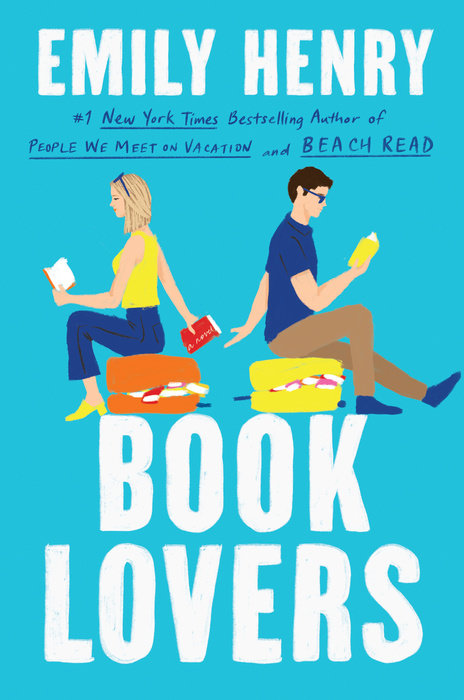
Brief Summary of the Plot from Goodreads:One summer. Two rivals. A plot twist they didn’t see coming….
Nora Stephens’ life is books—she’s read them all—and she is not that type of heroine. Not the plucky one, not the laidback dream girl, and especially not the sweetheart. In fact, the only people Nora is a heroine for are her clients, for whom she lands enormous deals as a cutthroat literary agent, and her beloved little sister Libby.
Which is why she agrees to go to Sunshine Falls, North Carolina for the month of August when Libby begs her for a sisters’ trip away—with visions of a small-town transformation for Nora, who she’s convinced needs to become the heroine in her own story. But instead of picnics in meadows, or run-ins with a handsome country doctor or bulging-forearmed bartender, Nora keeps bumping into Charlie Lastra, a bookish brooding editor from back in the city. It would be a meet-cute if not for the fact that they’ve met many times and it’s never been cute.
If Nora knows she’s not an ideal heroine, Charlie knows he’s nobody’s hero, but as they are thrown together again and again—in a series of coincidences no editor worth their salt would allow—what they discover might just unravel the carefully crafted stories they’ve written about themselves.
My Review: I am not usually a romance novel reader, but have gotten into it recently because I’ve heard that you should read what you are currently writing to get you in the mindset. I also am not usually a fan of romance movies or rom coms. From my limited understanding, this book covers the small town romance trope. Emily Henry writes in the “Behind the Book” section at the end of the book:
“And having seen enough of these low-angst, made-for-TV delights (Hallmark and otherwise), I found myself fascinated with one particular iteration of the small-town romance. It goes like this: an uptight, joyless, career-obsessed main character gets shipped off from the big city they call home to conduct business in Middle America. They don’t want to go! They don’t even have the right shoes for this kind of setting! But once they’re there, not only do they manage to fall in love with one of the sweet, small-town locals, but they also manage to learn the true meaning of life. (Spoiler alert: it’s not a high-power career in a major metropolis. And everyone ends up happy. Well, everyone except for the ex. The woman (or man) left behind in the city, whose entire role is usually to call the lead character and bark at them over the phone, remind them that they went to Smalltown, USA for business–to conduct a mass layoff, or to crush the local toy emporium so Big Toy can open its 667th location in the heart of the town, while maybe bulldozing a gazebo or two on the way.”
Emily Henry goes on to say about the inspiration for Book Lovers: “I found myself asking, who is this woman? Where does her story go from here?”
Enter Nora Stephenson, the woman left behind in the big city. Nora, a high earning, workaholic, book agent, has been left behind THREE times! Nora loves her job, the city (a.k.a. Manhattan), and her life there. The City is where she grew up with her mother and sister Libby — where her mother died. The City for Nora is not only a place to live, but a place where her mother’s memory can be found on every corner. She couldn’t imagine anything worse than living in one of those small-towns from the romance novels she reads, or in general moving from the City to anyplace else.
We meet Charlie Lastra (a book editor) pretty early in the book, and it is obvious that this guy will be the love interest. Nora is late to her meeting with Charlie because she was being dumped, en route, by another guy who is leaving her for a small-town local girl. At this point, Nora is so used to this being her luck with men, that it doesn’t phase her. She really could care less. When she arrives at the table, to pitch her client’s new manuscript, which takes place in Sunshine Falls, a small town in North Carolina, Charlie turns down the book. Whatever, Charlie is a nightmare anyway (everyone says so).
The joke is on Charlie Lastra, because 2 years later, the book Nora was pitching is a best seller making tons of money.
Libby (Nora’s sister) is a mother of 2, with a 3rd on the way, and guilts Nora into taking a four-week relaxation vacation to Sunshine Falls. Nora, who gives Libby whatever she wants, agrees. There is a lot of baggage in the relationship between the sisters, stemming from the death of their mother when they were young. In short, Nora had to step into the mother role and gave up a lot of her dreams. Nora puts Libby first, but Libby is unhappy that Nora works too much and doesn’t seem to have time for Libby anymore, etc.
Anyway, they go to Sunshine Falls, and who should Nora see there, but Charlie. Turns out he is FROM Sunshine Falls, which is why he didn’t want to edit the book because it was clear from the manuscript that the author had never been to Sunshine Falls. Sparks fly, etc. Charlie and Nora are like the same person, except you know, Nora is a woman and Charlie is a man. Has Nora stepped into a small-town romance of her own?
I could go on about the plot, but I think you get the idea.
From the synopsis, I was afraid that this book was going to be too much like Beach Read, but I was pleasantly surprised that it was not. I really liked the main characters Charlie and Nora. Their characters were believable, with real problems. I felt that this was a “small-town romance”, but in real terms rather than movie terms. Nora was a smart, professional woman, who had a hard time finding a man who could handle that — which unfortunately is a very real problem. Charlie, also in love with the City, is stuck in Sunshine falls taking care of the family business and his ailing father. This is also a real life problem faced by many people. Aging parents, no one else to take care of them…etc.
I think that Bookshelf Fantasies says it best in saying that “[t]he plot has much more depth than you might expect. Emily Henry excels at creating funny, quirky, unusual characters, then giving them rich backstories that humanize them and expose the pains and sorrows behind their facades. The same is true here, and it makes Nora much more likable than she initially comes across, so much so that I became very invested in her happiness and well-being.”
I also loved how Charlie and Nora were not perfect, but perfect for each other. I agree with Ali’s Books, when she says “Charlie and Nora are perfection together. When they come together it’s HOT and not because the scenes are steamy, but because you feel their connection so deeply. The way Charlie worships and adores Nora is just everything. And watching the sisters heal and reconnect was beautiful, too.”
I also appreciated that the banter between the characters did not get tiresome as in most romance books I’ve read lately. They are both playfully sarcastic, but the conversations were not stupid or annoying, and did not seem contrived just for the sake of having a conversation to show how sarcastic the characters were — meaning that the conversation had purpose, depth, a certain realistic edge to it.
While the ending was predictably a happy one, it was also very realistic, which was great. I can’t stand sappy, ridiculous endings that just ruin an otherwise good book. I’m so glad that this didn’t happen here, because I would have been pretty annoyed.
Goodreads Monday is hosted by Budget Tales Book Blog. “Goodreads Monday allows you to post about what books are on your “to read” lists, the progress you have made on your current books and reading challenge, and any other Goodreads news!”
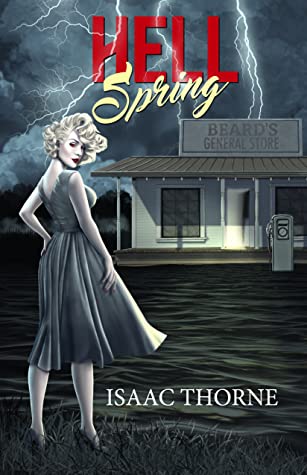
In the twilight of March 21, 1955, eight people take cover in their local general store while a thundering torrent and flash flooding threatens life and livelihood alike. None of the eight are everything they claim to be. But only one of them hungers for human souls, flesh, and blood.
An overflowing waterway destroys their only path of escape. The tiny band of survivors is forced to confront themselves and each other when a peculiar stranger with a famous face tries to pick them off one by one.
Can the neighbors survive the predator in their midst as well as the 100-year flood that drowns the small town of Lost Hollow?
Or will they become victims of the night the townsfolk all remember as Hell Spring?
From the notorious Lizzie Bordento the innumerable, haunted rooms ofSarah Winchester‘s mysterious mansionthis offbeat, insightful, first-ever book of its kind explores the history behind America’s female ghosts, the stereotypes, myths, and paranormal tales that swirl around them, what their stories reveal about us–and why they haunt us…
Sorrowful widows, vengeful jezebels, innocent maidens, wronged lovers, former slaves, even the occasional axe-murderess–America’s female ghosts differ widely in background, class, and circumstance. Yet one thing unites them: their ability to instill fascination and fear, long after their deaths. Here are the full stories behind some of the best-known among them, as well as the lesser-known–though no less powerful.
Tales whispered in darkness often divulge more about the teller than the subject. America’s most famous female ghosts, like New Orleans voodoo priestess Marie Laveau, and Bridget Bishop, the first person executed during the Salem witchcraft trials, mirror each era’s fears and prejudices. Yet through urban legends and campfire stories, even ghosts like the nameless hard-working women lost in the infamous Triangle Shirtwaist Factory fire –achieve a measure of power and agency in death, in ways unavailable to them as living women.
Riveting for skeptics and believers alike, with humor, curiosity, and expertise, A Haunted History of Invisible Women offers a unique lens on the significant role these ghostly legends play both within the spook-seeking corners of our minds and in the consciousness of a nation.
While trying to sort out the answer to this question-along with the question of what being Jewish meant to her-Zark began writing. This book was born of the journey. Married to the cantor of a Jewish synagogue, trying to fit in to a life she hadn’t anticipated, Jenna Zark is completely unprepared when her marriage falls apart. Now staring down the prospect of being a single mom, Zark has to decide if and how to work with her former husband, now co-parent, to give her son a Jewish heritage. While the holidays and rituals in these pages are Jewish, the theme is universal and familiar for anyone who has ever experienced lifetransforming loss. Crooked Lines is Jenna Zark’s honest and compelling story of navigating divorce, single parenthood, interfaith marriage, and losing parents while holding on to one’s humor and traditions.
Progress:102 pages out of 212 (last reporting was page 102)
A female apothecary secretly dispenses poisons to liberate women from the men who have wronged them – setting three lives across centuries on a dangerous collision course.
Rule #1: The poison must never be used to harm another woman. Rule #2: The names of the murderer and her victim must be recorded in the apothecary’s register.
One cold February evening in 1791, at the back of a dark London alley in a hidden apothecary shop, Nella awaits her newest customer. Once a respected healer, Nella now uses her knowledge for a darker purpose – selling well-disguised poisons to desperate women who would kill to be free of the men in their lives. But when her new patron turns out to be a precocious twelve-year-old named Eliza Fanning, an unexpected friendship sets in motion a string of events that jeopardizes Nella’s world and threatens to expose the many women whose names are written in her register.
In present-day London, aspiring historian Caroline Parcewell spends her tenth wedding anniversary alone, reeling from the discovery of her husband’s infidelity. When she finds an old apothecary vial near the river Thames, she can’t resist investigating, only to realize she’s found a link to the unsolved “apothecary murders” that haunted London over two centuries ago. As she deepens her search, Caroline’s life collides with Nella’s and Eliza’s in a stunning twist of fate – and not everyone will survive.
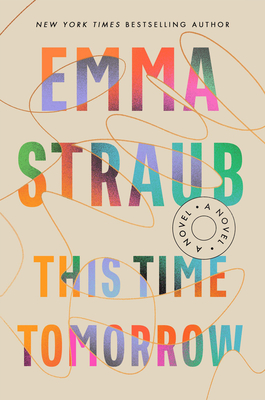
With her celebrated humor, insight, and heart, beloved New York Times bestseller Emma Straub offers her own twist on traditional time travel tropes, and a different kind of love story.
On the eve of her 40th birthday, Alice’s life isn’t terrible. She likes her job, even if it isn’t exactly the one she expected. She’s happy with her apartment, her romantic status, her independence, and she adores her lifelong best friend. But her father is ailing, and it feels to her as if something is missing. When she wakes up the next morning she finds herself back in 1996, reliving her 16th birthday. But it isn’t just her adolescent body that shocks her, or seeing her high school crush, it’s her dad: the vital, charming, 40-something version of her father with whom she is reunited. Now armed with a new perspective on her own life and his, some past events take on new meaning. Is there anything that she would change if she could?
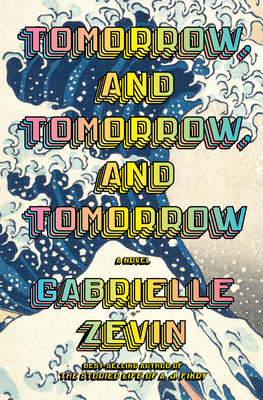
In this exhilarating novel by the best-selling author of The Storied Life of A. J. Fikry two friends–often in love, but never lovers–come together as creative partners in the world of video game design, where success brings them fame, joy, tragedy, duplicity, and, ultimately, a kind of immortality.
On a bitter-cold day, in the December of his junior year at Harvard, Sam Masur exits a subway car and sees, amid the hordes of people waiting on the platform, Sadie Green. He calls her name. For a moment, she pretends she hasn’t heard him, but then, she turns, and a game begins: a legendary collaboration that will launch them to stardom. These friends, intimates since childhood, borrow money, beg favors, and, before even graduating college, they have created their first blockbuster, Ichigo. Overnight, the world is theirs. Not even twenty-five years old, Sam and Sadie are brilliant, successful, and rich, but these qualities won’t protect them from their own creative ambitions or the betrayals of their hearts.
Spanning thirty years, from Cambridge, Massachusetts, to Venice Beach, California, and lands in between and far beyond, Gabrielle Zevin’s Tomorrow, and Tomorrow, and Tomorrow is a dazzling and intricately imagined novel that examines the multifarious nature of identity, disability, failure, the redemptive possibilities in play, and above all, our need to connect: to be loved and to love. Yes, it is a love story, but it is not one you have read before.
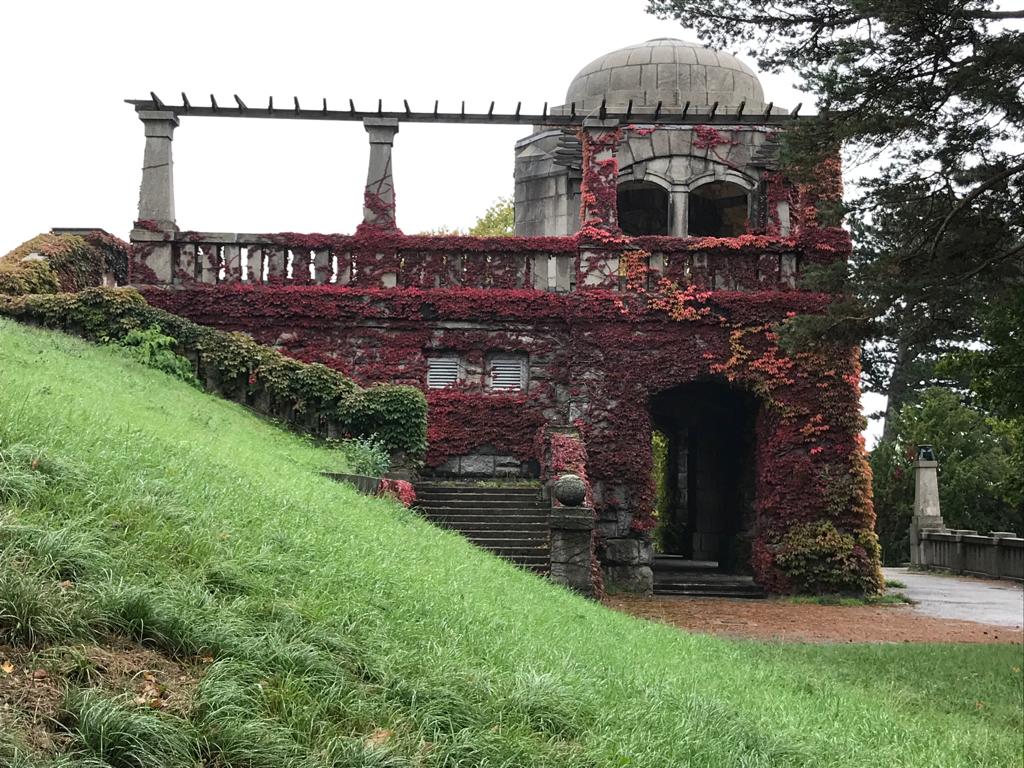
The theme of this week’s Sunday Stills Photo Challenge, is called “Dilapidated”. The online dictionary defines “dilapidated”, as “(of a building or object) in a state of disrepair or ruin as a result of age or neglect.”
My daughter has recently started daycare at 13 months old. In Austria, where we live, there is a thing called the “settling in period”. Basically, this is where the children are given a period of adjustment, so that they can get used to being left in the care of the pedagogues. Since my daughter is having a difficult time with this adjustment, she only stays at daycare for about 90 minutes each day. During this period, I usually go for a walk around the area.
On Friday, I walked past this old, unused, building covered in ivy. With the fall colors I thought it was very pretty and took a few pictures of it. I had no idea what it had been previously used for.
When I got home, I asked my boyfriend what this building used to be, and he thinks it is an abandoned water basin (a place where they used to bring water down from the mountains for Vienna).
I love just walking around Vienna in new streets or parks — there is always so much history to find!
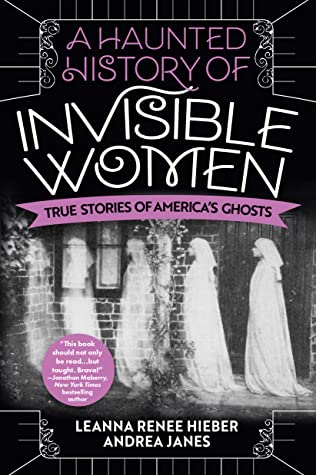
Brief Summary of the Plot from Goodreads:From the notorious Lizzie Bordento the innumerable, haunted rooms ofSarah Winchester‘s mysterious mansionthis offbeat, insightful, first-ever book of its kind explores the history behind America’s female ghosts, the stereotypes, myths, and paranormal tales that swirl around them, what their stories reveal about us–and why they haunt us…
Sorrowful widows, vengeful jezebels, innocent maidens, wronged lovers, former slaves, even the occasional axe-murderess–America’s female ghosts differ widely in background, class, and circumstance. Yet one thing unites them: their ability to instill fascination and fear, long after their deaths. Here are the full stories behind some of the best-known among them, as well as the lesser-known–though no less powerful.
Tales whispered in darkness often divulge more about the teller than the subject. America’s most famous female ghosts, like New Orleans voodoo priestess Marie Laveau, and Bridget Bishop, the first person executed during the Salem witchcraft trials, mirror each era’s fears and prejudices. Yet through urban legends and campfire stories, even ghosts like the nameless hard-working women lost in the infamous Triangle Shirtwaist Factory fire –achieve a measure of power and agency in death, in ways unavailable to them as living women.
Riveting for skeptics and believers alike, with humor, curiosity, and expertise, A Haunted History of Invisible Women offers a unique lens on the significant role these ghostly legends play both within the spook-seeking corners of our minds and in the consciousness of a nation.
My Review: I received this audiobook from NetGalley in exchange for an honest review.
I thought this book was well done, but I found it to be more informational than scary. Despite the “horror” classification on Goodreads, I personally do not think that this book fits into that genre. The authors told the tales of female ghosts, but in the context of how women were / are societally perceived, and how this perception spawned such ghost stories. So, for me, it was more a book about the history of ghosts and the societal reasons why ghost stories are created, rather than a compilation of ghost stories.
I hadn’t ever thought to much into how ghost stories came about. It was very interesting to get the authors’ take based upon the historical evidence.
As of the writing of this review this book has about a 3.8 average rating on Goodreads, with about 111 ratings overall. Honestly, this is surprising to me and seems a bit unfair. Most of the lower ratings are from people who say the book is to “feminist” for them, or rag on the authors for not collecting interviews from people who have seen these ghosts, or for not sharing their own personal ghost stories. But I don’t think this was the point of the book. This book wasn’t about the stories themselves per se, but how these ghost stories were formed and how said stories have shaped society in the retelling. It is an interesting and unique perspective to these ghost stories, one which I had never read before.
Therefore, I would recommend this book, especially for those people who like history and ghosts.
Disclosure of Material Connection: I received this book free from Netgalley. I was not required to write a positive review. The opinions I have expressed are my own. I am disclosing this in accordance with the Federal Trade Commission’s 16 CFR, Part 255: “Guides Concerning the Use of Endorsements and Testimonials in Advertising.
Brief Summary of the Plot from Goodreads:Fresh from a brief stay at a psych hospital, reporter Camille Preaker faces a troubling assignment: she must return to her tiny hometown to cover the unsolved murder of a preteen girl and the disappearance of another. For years, Camille has hardly spoken to her neurotic, hypochondriac mother or to the half-sister she barely knows: a beautiful thirteen-year-old with an eerie grip on the town. Now, installed in her old bedroom in her family’s Victorian mansion, Camille finds herself identifying with the young victims—a bit too strongly. Dogged by her own demons, she must unravel the psychological puzzle of her own past if she wants to get the story—and survive this homecoming.
My Review: Camille Preaker, now a reported living in Chicago, is sent to her childhood hometown Wind Gap to cover the story of two child murders. To say that Camille had a troubled childhood would be an understatement. The tag line on the cover of the book I rented from the library states: “This family isn’t nuclear. It’s toxic.” That’s a mild way to put it.
Adora, the family matriarch and Camille’s mother is beloved by the small town of 2,000 residents. The Preaker’s are old money, and own the biggest business in town: a hog farm and butchery. When Camille was thirteen, her sister Marian died after a long bout of illnesses. Marian, the more loved child. The more adored child. Camille had always been second best. Soon after, Camille started cutting words on her body until only a small patch of skin on her back was unmarred. By the time she was an adult, she was also an alcoholic.
At the age of 30 she went to rehab for 6 months, a place for girls who cut. Her mother only visited once. “Then, inevitably, came the stories of Marian. She’d already lost one child, you see. It had nearly killed her. Why would the older (though necessarily less beloved) deliberately harm herself? I was so different from her lost girl, who — think of it — would be almost thirty had be lived. Marian embraced life, what she had been spared. Lord, she had soaked up the world — remember, Camille, how she laughed even in the hospital? I hated to point out to my mother that such was the nature of a bewildered, expiring ten-year-old. Why bother? It’s impossible to compete with the dead. I wished I could stop trying.”
Despite this horrible relationship and past, Camille, fresh out of rehab is heading back to the place where her demons grew up — to stay in the very house where they were created. Wind Gap was “the place where [her] sister died, the place [she] started cutting [her]self. A town so suffocating and small, you tripped over people you hated every day. People who knew things about you. It’s the kind of place that leaves a mark.”
For the first time in a long time, Camille sees Amma, the half-sister she knows very little about. “My mother said she was the most popular girl in school, and I believed it. Jackie said she was the meanest, and I believed that, too. Living in a swirl of Adora’s bitterness had to make one a bit crooked. And what did Amma make of Marian, I wondered? How confusing to live in the shadow of a shadow. But Amma was a smart girl — she did her acting out away from home. Near Adora she was compliant, sweet, needy — just what she had to be, to get my mother’s love.”
Gillian Flynn paints the picture of a bleak town in Nowheresville, America, where you are either a winner or a loser. “Old money and trash,” as Camille puts it. Now, two young teenagers are dead, strangled with their teeth pulled out. By all accounts these girls had their troubles — sometimes they were even bullies, but who would do such a heinous thing? Suspects abound, the police seem a tad incompetent, or at best overwhelmed / out of their league. Will the killer be caught before the next girl goes missing?
The mystery keeps you in it’s grip until the end.
I also really love Gillian Flynn’s writing style. Here are some examples:
“I rang the doorbell, which had been a cat-calling screech when I was very young, now subdued and truncated, like the bing! you hear on children’s records when it’s time to turn the page.”
“I drank more vodka. There was nothing I wanted to do more than be unconscious again, wrapped in black, gone away. I was raw. I felt swollen with potential tears, like a water balloon filled to burst. Begging for a pin prick. Wind Gap was unhealthy for me. This home was unhealthy for me.”
This book was published back in 2006 — wow already 16 years ago — so chances are you might have already read it. In case you haven’t yet, please do. This book is just fantastic.





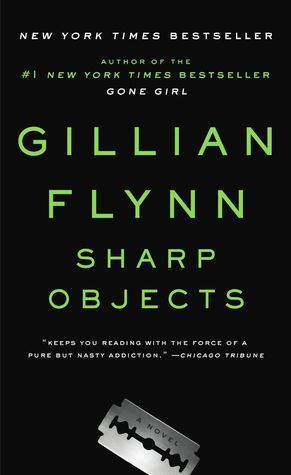 Title: Sharp Objects
 The Legal Alien