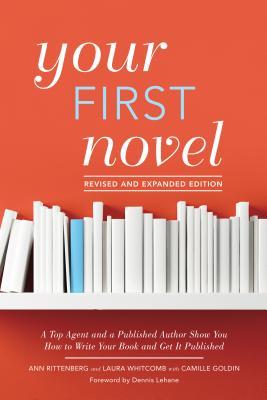
Title: Your First Novel
Authors: Ann Rittenberg and Laura Whitcomb
Book Length: 312 pages
Rating: 3 out of 5 stars
Genre: Nonfiction, Writing, Reference, Self-Help
Read Start Date: January 10, 2023
Read Finish Date: May 11, 2023
Brief Summary of the Plot from Goodreads: Your Expert Guide to Writing and Publishing a Novel.
In this revised and expanded edition of Your First Novel, novelist Laura Whitcomb, seasoned literary agent Ann Rittenberg, and her knowledgeable assistant, Camille Goldin, team up to provide you with the essential skills needed to craft the best novel you can–and the savvy business know-how to get it published. Complete with updated references, analysis of new best-selling novels, and the same detailed instruction, Whitcomb will show you how
• Practice the craft of writing, using both your right- and left-brain
• Develop a flexible card system for organizing and outlining plot
• Create dynamic characters that readers love–and love to hate
• Study classic novels and story structure to adapt with your ideas
Featuring two new chapters on choosing your path as an author and understanding the world of self-publishing, Rittenberg and Goldin dive into the business side of publishing,
• What agents can–and should–do for your future
• Who you should target as an agent for your burgeoning career
• How the mysterious auction for novels actually goes down
• Why you should learn to work with your agent through thick and thin
Guiding your first novel from early words to a spot on the bookshelf can be an exciting and terrifying journey, but you’re not alone. Alongside the advice of industry veterans, Your First Novel Revised and Expanded also includes plenty of firsthand accounts from published authors on their journeys, including Dennis Lehane, C.J. Box, Kathleen McCleary, David Kazzie, and more.
My Review: Your First Novel Revised and Expanded Edition: A Top Agent and a Published Author Show You How to Write Your Book and Get It Published is a comprehensive guidebook that offers valuable insights and expert advice on the process of writing and publishing your first novel. In this revised and expanded edition, a highly regarded literary agent and a successful published author join forces to provide aspiring writers with practical techniques, step-by-step instructions, and industry secrets to help bring their literary dreams to fruition.
This book covers a wide range of topics, including developing compelling characters, constructing engaging plots, crafting authentic dialogue, refining writing style, and polishing manuscript drafts. It also delves into the intricacies of the publishing industry, providing guidance on query letters, book proposals, finding the right literary agent, and navigating the submission and publication process.
I am only giving it three stars because I was disappointed in the publishing aspect (the reason why I bought the book). First, a lot of the advice was not useful to me. Of course, this is a subjective review, and therefore subjective reasoning. You might like the book more, or find it more useful if you had a degree in writing, had published somewhere, or live in America. For example, she advised that 1) you have to have writing credentials already (I am an unpublished lawyer, so nothing like that in my background) and 2) you need to go to conventions and meet agents, or you need to do readings in bookstores, etc. I live in Austria so none of these things are possible.
While the first portion of the book (how to write your first novel) was interesting to read, I feel like in order to fully make use of it, one would have to take notes. I was also not familiar with a lot of the novels referenced / used as examples in the book (or if I knew of the novel, I had not read it).
Lastly, I was a little annoyed before I even read the book because I came across the book on the website of Ann Rittenberg’s literary agency when I was researching agents to query. The link on her webpage brought me to the old edition of the book being sold on Amazon. It wasn’t until I went to start reading it and entered it into Goodreads, that I discovered that there had been a newer version of the book published years later. Obviously a book published in 2018 is going to have more timely and up to date information on the industry than a book written in 2006. So I ended up having to buy the book….again. Why would you not update your webpage? Or at least make sure the link was correct?
So in conclusion, am I saying this book isn’t a good resource? No, it could definitely be. It just wasn’t for me.
 A few weeks ago I was lucky enough to travel to Japan on a business trip (it was my first time being there). My company has offices in Hiroshima, and we were there for one week giving a training on legal issues. We spent the weekend in Kyoto, since we were giving the same training at our office in China the following week, and we didn’t want to fly all the way back to Austria on Friday, only to have to return to Asia two days later again on Monday.


 The Legal Alien